God Breathes Life Into Our Greatest Fears
2 Kings 4:28 (NLT) “Then she said, “Did I ask you for a son, my lord? And didn’t I say, ‘Don’t deceive me and get my hopes up’?”
We have all been there. You finally receive the breakthrough you prayed for—the healing, the dream, the career step—only for the ground to shift beneath your feet. The blessing you cherished suddenly slips through your fingers.
In those moments, an agonizing thought creeps into our minds: Did God give me this hope just to take it away?
To answer this, we have to travel back to a quiet upper room in a town called Shunem, where an unnamed woman faced the ultimate test of faith in 2 Kings 4:8-37. Her story is a raw, unfiltered blueprint for how to navigate seasons when God’s promises seem to fade and a beautiful reminder of how God intimately steps into our deepest vulnerabilities.
Elisha and the Woman from Shunem
The story begins with a woman of high standing who shows radical hospitality to the prophet Elisha. When Elisha desires to repay her kindness, he discovers she has no son and her husband is old. He makes a prophecy: "About this time next year, you will hold a son in your arms."
Look closely at her immediate reaction: “No, my lord!” she cried. “O man of God, don't deceive me and get my hopes up like that.”(2 Kings 4:16) NLT.
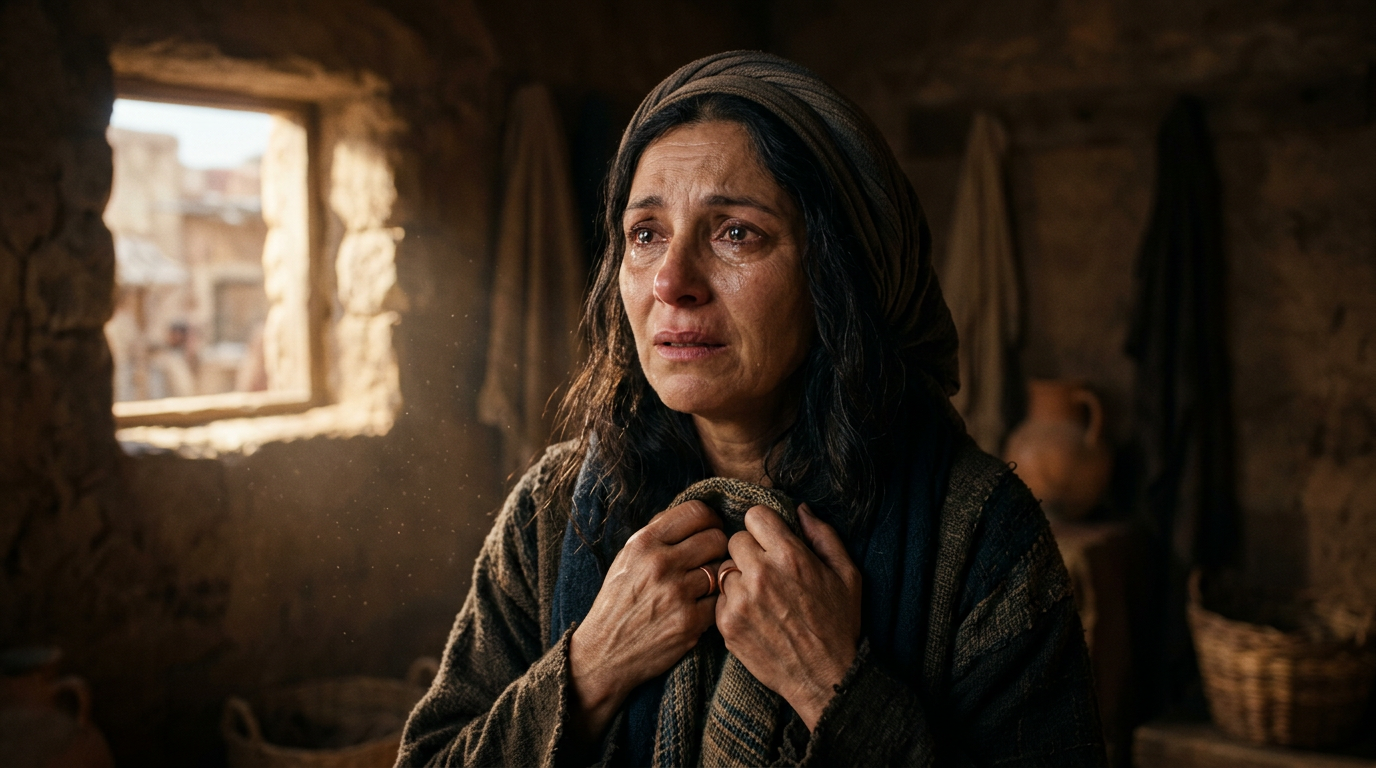
Why was she afraid? Because hope is vulnerable. It is often safer to remain content in our barrenness than to risk the agony of disappointment. She had built a quiet, safe life around her empty womb. Elisha’s promise threatened that safety by forcing her to feel a desire she had buried long ago. Yet, despite her fear, God gave her a son. He woke up a dead womb and injected supernatural joy into her life.
When the Promise is Shaken
The boy grew. But one day, out in the harvest fields, he cried out, "My head hurts! My head hurts!" (verse 19). He was carried back to his mother, sat on her lap until noon, and died.
Imagine the crushing, suffocating silence in that room. The absolute worst-case scenario had happened. The very gift God initiated, promised, and delivered was suddenly gone.
Notice what the Shunammite woman does next. She doesn’t scream in despair or call for a funeral director. She carries the dead boy up to Elisha’s room, lays him on the bed, shuts the door, and sets out on an urgent journey to Mount Carmel.
As she rushes toward the prophet, her husband questions her, and Elisha’s servant, Gehazi, intercepts her on the road, asking, "Is everything all right?" To both, she responds :"It is alright/ It is well”.
She wasn't denying reality; she was protecting the promise. Telling her husband or a bystander would have triggered immediate burial rituals. She refused to let people bury what God had breathed life into. She saved her raw brokenness for the prophet himself, knowing that the messenger who delivered God's original promise was the right place to take her grief.
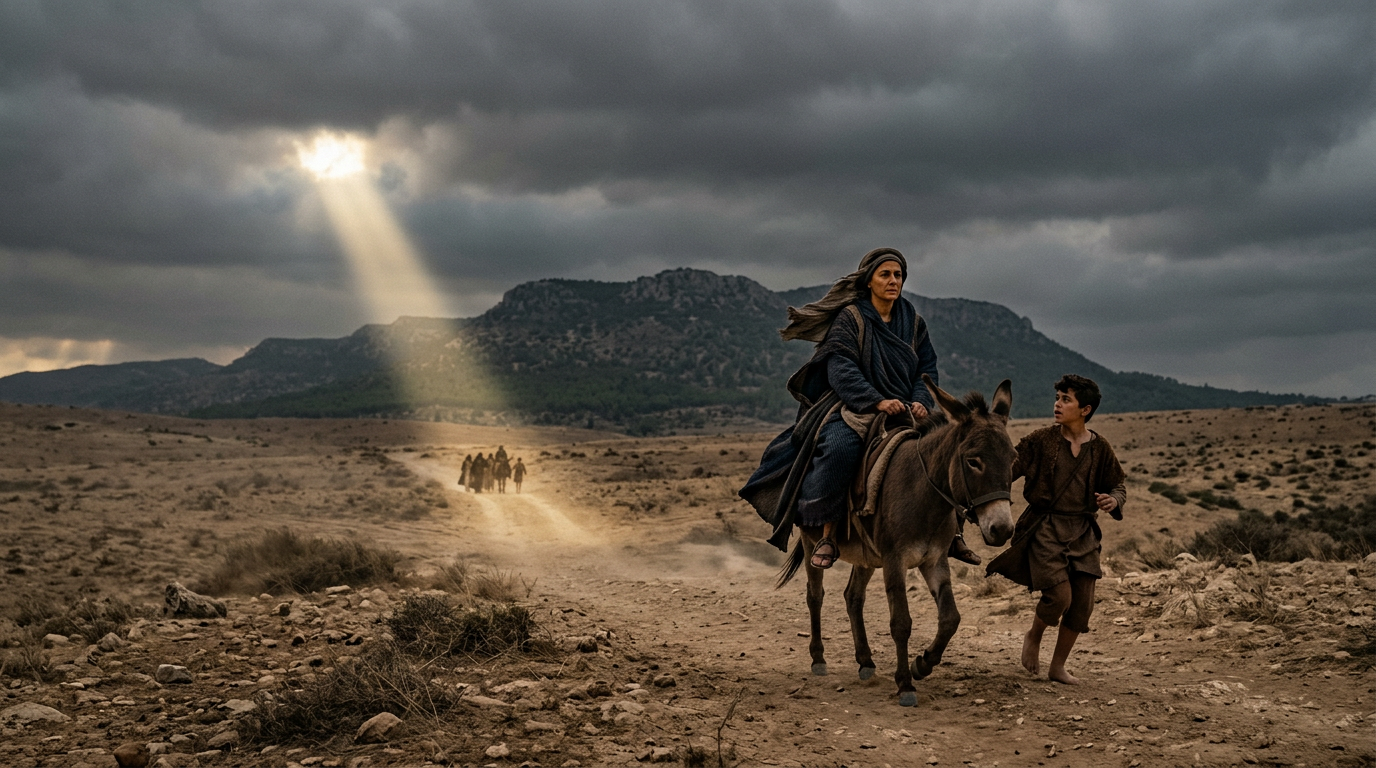
The Shunammite woman riding a donkey to meet Elisha
Raw Vulnerability at the Feet of Grace
When she finally reaches Elisha, the composure vanishes. She falls to the ground, catches him by the feet, and pours out her unfiltered soul, referencing the exact words she spoke years before:
“Did I ask you for a son, my lord? Didn’t I tell you, ‘Don’t raise my hopes’?” (2 Kings 4:28).
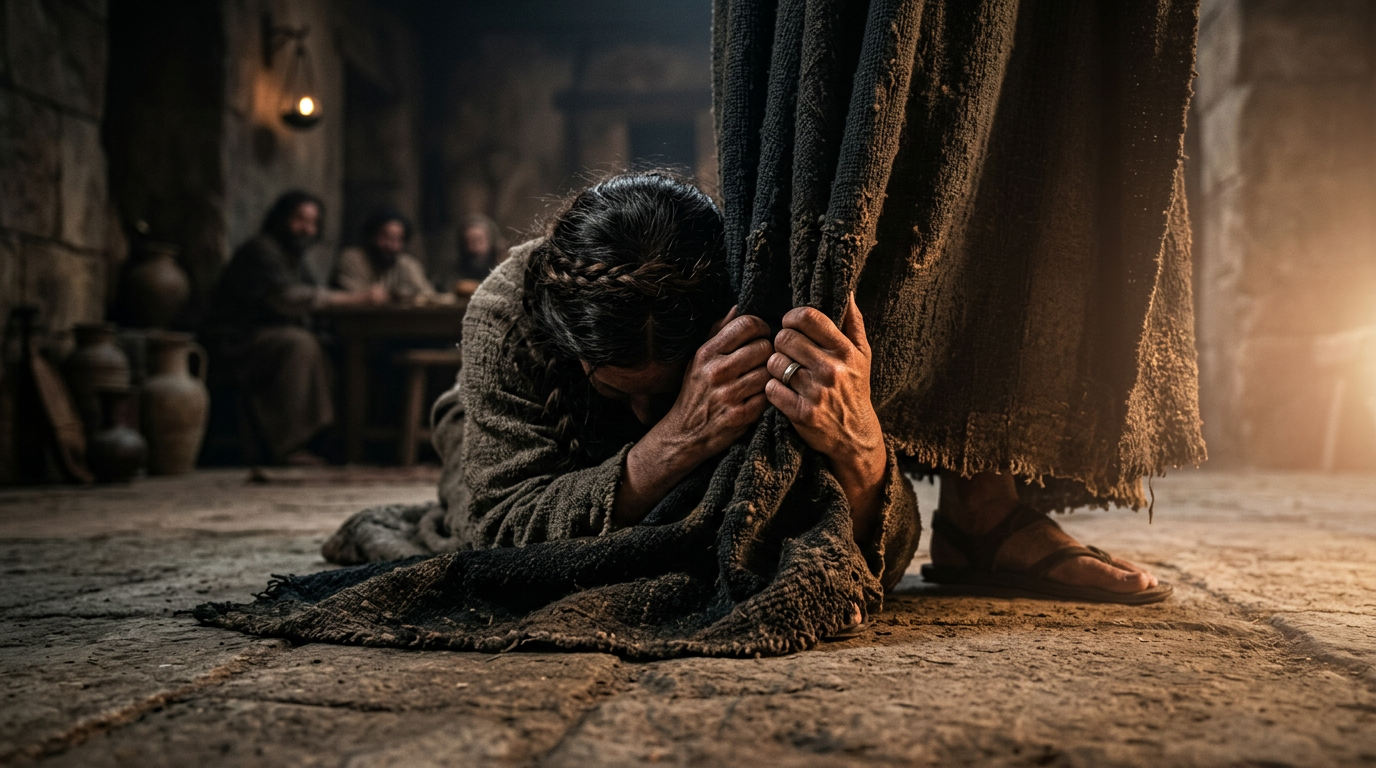
The Shunammite woman at Elisha's feet
This wasn't a lack of faith; it was the ultimate, fierce expression of it. Her vulnerability at Elisha's feet wasn't polite or polished—it was a heart-shattering confrontation. She was holding God accountable to His own word. She was saying, "You brought this life into my world when I didn't even ask for it. You cannot leave it in death."
Elisha returns with her. Through persistent, intimate, and miraculous intercession, the boy sneezes seven times and opens his eyes. Life wins. The promise is restored.
Faith is the Root; Hope is the Fruit
Think of faith as the anchor and hope as the sails. Faith is your trust in who God is, grounded in His past faithfulness and unchanging character. Hope is the confident expectation of what He will do in your future because of that faith. You cannot have a forward-looking hope if you don’t have a rock-solid faith in the One holding tomorrow.
The Shunammite woman illustrated the dynamic relationship between the two:
Her Faith: She had the conviction to lay her dead son on Elisha's bed, shut the door, and run straight to the prophet. Her faith told her that the God who gave the life was the only One with the authority to answer for it.
Her Hope: Her faith gave birth to an audacious hope that refused to accept death as the final answer. It was hope that allowed her to say "Shalom" (It is well) on the road, confidently expecting that a resurrection was still possible.
A Hope Rooted in Faith
Hebrews 11:1 (KJV) Now faith is the substance of things hoped for, the evidence of things not seen.
When we look at her cry—“Don’t raise my hopes”—we see a woman desperately trying to protect her heart from the agony of a broken promise. But her story reveals a spiritual truth that hope is always anchored by faith.
While hope looks forward to what God will do, faith rests entirely in who God is. The Shunammite woman’s faith in the character of God gave her the strength to hope for a miracle, even when looking at a lifeless room. Her ancient fear of being misled is beautifully answered by the absolute certainty we find when our faith and hope are placed in Him:
Romans 5:5: “And this hope will not lead to disappointment. For we know how dearly God loves us, because he has given us the Holy Spirit to fill our hearts with his love.”
Romans 15:13: “I pray that God, the source of hope, will fill you completely with joy and peace because you trust in him. Then you will overflow with confident hope through the power of the Holy Spirit.”
God did not allow the boy to die to torture the mother. He allowed the crisis so that her hope would move from being a fragile, fearful wish into an unshakeable, firsthand witness of His power over the grave. He took her greatest fear—losing the child—and turned it into the ultimate canvas of His sovereignty.
If you are sitting in the dark right now, looking at a dream, a promise, or a situation that feels completely stagnant, do what the Shunammite woman did. Shut the door on the doubters. Speak Shalom over your panic. Run straight to the feet of the Father, pour out your raw, unfiltered heart, and trust that He who raised your hopes will never abandon you.
What a study!
Enjoy the song of the week as we meditate on today’s reflection. As always, take some time to read through the full chapter, as you may see even more than I’ve highlighted here. See you soon!
